

By occupation
Browse the Green List
Start from the job you want and work backwards to the qualification it actually asks for.
See occupations
Study a taught master's in New Zealand, work for up to three years afterwards on an open visa, and step onto a residence pathway through the Green List. It does not have to be a university: an institute of technology teaches the same level 9 degree for roughly half the money, and the visa outcome is identical.

A coursework master's is a structured programme of taught courses at an advanced level, usually finishing with a project or an industry placement rather than a thesis. It is the type to aim for, and in some cases it will take you into a different professional area from your first degree.
Immigration New Zealand grants the post-study work visa on the level of the qualification, not the type of provider. Wintec teaches a level 9 master's for NZ$24,600 a year and Unitec for about NZ$30,415 per 120 credits, where the University of Auckland publishes NZ$55,484.50 for 120 points of engineering. Same visa outcome, roughly half the money. Engineering is the exception: no institute of technology here teaches an engineering master's.
Wellington's Master of Software Development requires a bachelor degree that is not in computer science. Auckland's Master of Engineering Studies accepts an approved bachelor degree rather than an engineering one on its 180 point option. AUT's Master of Computer and Information Sciences takes graduates from adjacent disciplines. Crossing over is the intended route, not an exception you have to argue for.
Wellington's Master of Building Science ends in an industry project or practicum. AUT's engineering and computing master's are taught with a project. That is the kind of work that turns into a first job offer, and it is also why a coursework master's is open to you when a research master's is not.
A level 9 master's qualifies for a post-study work visa of up to three years, with no employer sponsorship needed to start. Australia gives a coursework master's two years. The United Kingdom gives two years now and eighteen months from January 2027. That runway is the reason to come here.
A student visa can be granted with rights to work up to 25 hours a week during term and full time over scheduled holidays. Full time in the holidays needs a course worth 120 credits, which a master's comfortably meets. Check the conditions on your own visa, because the hours are a ceiling that is granted rather than an automatic entitlement. It takes real pressure off, though it will not fund the degree and the visa still requires evidence you can support yourself.
Immigration New Zealand lists 215 occupations with a defined residence pathway. We list the 180 a master's can lead to, and leave out the 35 trade and apprenticeship roles it cannot. Of the 180, 174 go straight to residence. Be clear eyed about the shape of them: 129 are health and social services. Engineering has 28, ICT 12 and construction 6. Read the requirement on the role you are aiming at, because several engineering roles ask for an accredited undergraduate engineering degree or an Engineering New Zealand letter, and a master's does not supply either.
How long you can stay and work once you graduate, how much you can work while you study, and what the route to residence actually is.
| Criterion | New Zealand | Australia | United Kingdom | Canada |
|---|---|---|---|---|
| Post-study work rights | Up to 3 years for a level 9 master's | 2 years for a coursework master's, 3 for a research master's | 2 years if you apply on or before 31 December 2026, 18 months after that | Up to 3 years for a master's, even if the programme was shorter than 2 years |
| Work rights while studying | Up to 25 hours a week in term, full time in scheduled breaks | 48 hours a fortnight while the course is in session, unlimited when it is not | Depends on the course. No single figure is published | Up to 24 hours a week off campus during terms |
| Pathway to residence | The Green List: 174 of its 215 roles go straight to residence with a qualifying job offer, and the rest after 24 months of work. Otherwise the Skilled Migrant Category, which needs 6 points, and a level 9 master's is worth 5 | Points-tested skilled migration. The Skilled Independent visa is permanent, but you need 65 points or more and an occupation on the skilled occupation list | No occupation list route. You must usually have lived and worked in the UK for 5 years, normally on a Skilled Worker visa | Express Entry, a ranked pool. Experience gained on a post-graduation work permit feeds the Canadian Experience Class, and the highest ranked are invited to apply |
New Zealand from immigration.govt.nz, Australia from the Department of Home Affairs subclass 189, 485 and 500 pages, the United Kingdom from gov.uk, Canada from Immigration, Refugees and Citizenship Canada. Checked 18 and 19 August 2026.
Seven stages. We are with you for all of them, and the first one costs nothing.
You tell us your degree, your grades and your English level. We tell you honestly which universities will take you, and which will not.
We shortlist coursework master's programmes that fit your background and are relevant to a Green List occupation, not just any offer.
We prepare the documents, handle the university, and manage the conditional and unconditional offers.
Funds evidence, medicals, police certificates and the application itself, prepared by a licensed adviser. The fee starts at NZ$850.
Accommodation, bank account, IRD number and the first few weeks on the ground.
On graduation, up to three years of open work rights while you find a role in your field. The fee starts at NZ$1,670.
A Tier 1 Green List role means applying straight away. Tier 2 means 24 months of work first. Either way it needs a qualifying job offer, not just the degree.
Three ways in, depending on what you already know.
Start from the job you want and work backwards to the qualification it actually asks for.
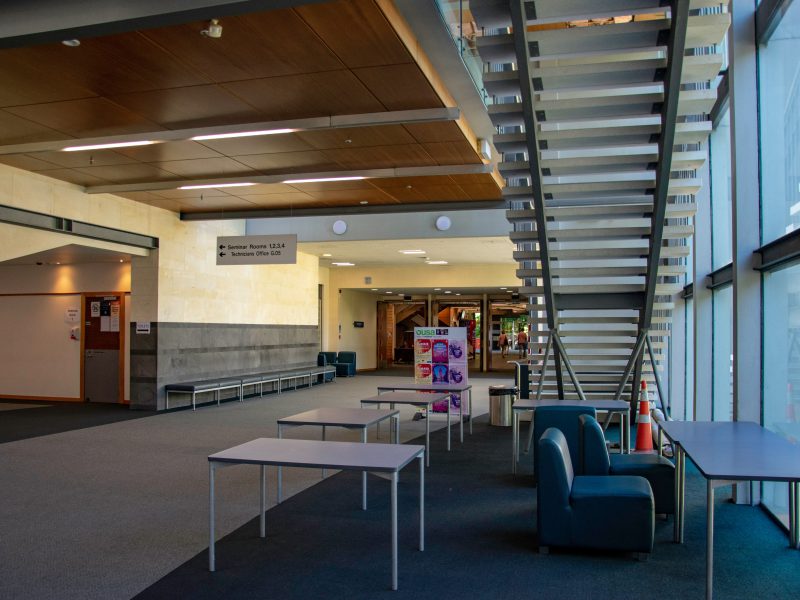
Twenty-seven taught master's, filtered by field, provider, type of provider, tuition and the IELTS band you can realistically reach.
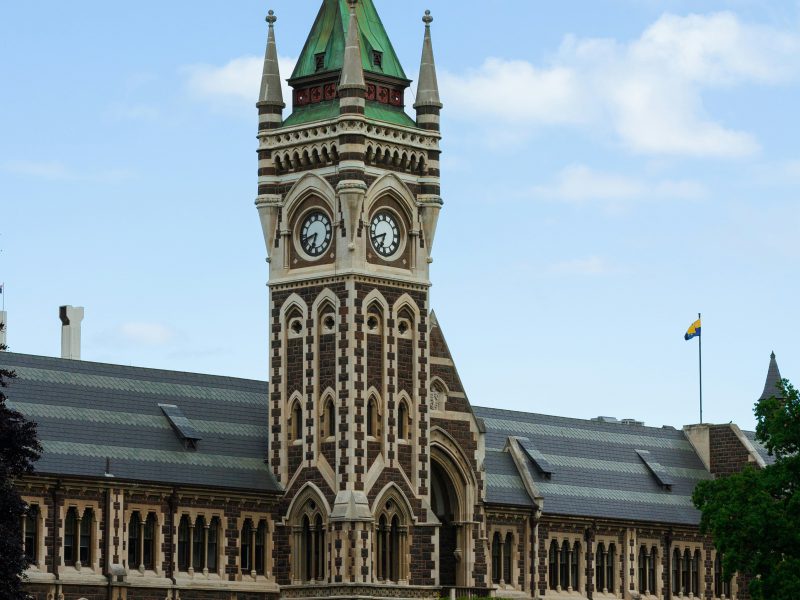
Fifteen providers: eight universities, six institutes of technology and one private training establishment, with published tuition side by side.
Send us your degree, your average and your English result. We will come back with a straight answer and a shortlist, at no cost.